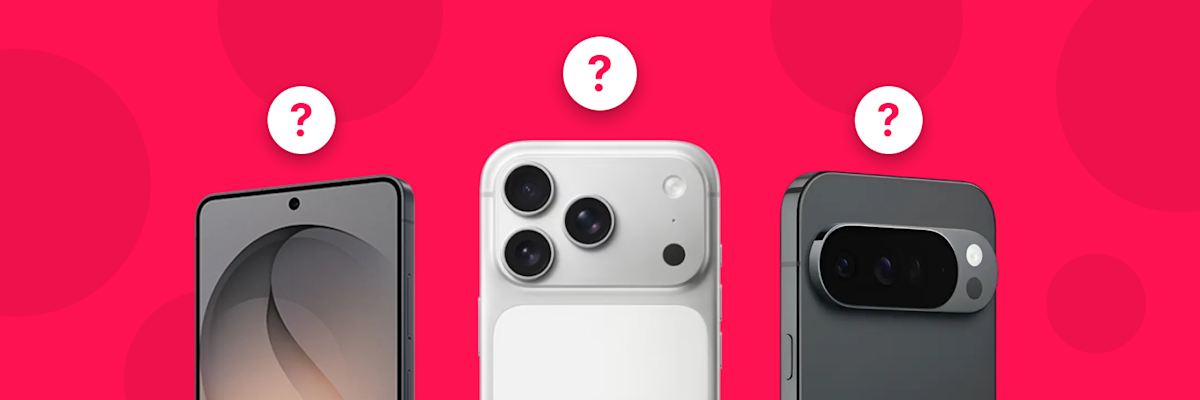
Rent, buy, or lease – which option really suits you?
Are you looking for a new iPhone, Samsung smartphone, or a new laptop, but don’t know whether you should rent, buy, or lease your device? Admittedly, each option has its individual merits, and everyone has different requirements for their tech products. For this reason, let’s take a look at the pros and cons together. In this article, you’ll get an overview: What’s behind the three models, where are the differences, and what should you look out for? Let’s get started.
The Classic: Buying
Tech of all kinds is usually purchased. This means you pay the full amount for the device and end up being both the possessor and the legal owner . You can do whatever you want with your acquired product. You could put stickers on it, change the technical components, and much more.
Only when buying tech products do you become the owner. This is a big advantage. Additionally, you don’t have to commit to a specific period in advance, as you would when renting or leasing. Once you have made the purchase, there are no ongoing costs or obligations . On top of that, you are free to resell your new tech – or later, used tech – at your convenience.
The downsides of buying tech
Of course, all that glitters is not gold. When buying, you pay a one-time sum (or in several stages with an installment purchase). For tech from Apple, Sony, Nintendo, Samsung, Acer, HP, Nvidia, and Co., this can get quite expensive. Especially when technology suddenly gives up the ghost, it can get tight for your wallet. And besides the high acquisition costs, laptops, game consoles, smartphones, and other technical products lose value quickly. Even right after unboxing, you rarely get the full price – or an amount close to it – when reselling.
Once the warranty has expired, you bear the full financial risk for defects or damage to your device. When renting and leasing, the devices are insured, at least for technical defects and some types of damage, provided this is contractually stipulated.
The pros and cons of buying at a glance:
+ You use your device exactly how you want.
+ After the purchase, no ongoing or hidden costs await you.
+ Reselling? Possible at any time.
- Acquisition costs are often quite high.
- The device loses value quickly.
- No protection in case of damage or technical defects.
- Technology becomes obsolete over time.
Flexible renting without high entry costs
Entering into a rental agreement is like the saying: "Why buy the cow when you can get the milk for free?" Well, it's not actually free, but you deliberately skip expensive purchases to benefit from the advantages. Especially with tech products, you can stay flexible, with the possibility of regularly switching to new models. You always stay up to date instead of still sitting at your old, slow laptop after five years. When renting, you focus exclusively on using, not owning.
When is it worth entering into a rental agreement instead of buying the device? Quite clearly: when you update regularly, want to test things out, or want to keep your budget flexible. Instead of strictly committing yourself, you stay mobile. You shape your everyday life yourself, even if your requirements change over time.
You don't necessarily have to decide in advance how long you want to use your tech product.
The pros and cons of renting at a glance:
+ No high acquisition costs; instead, manageable monthly payments.
+ You can switch your tech regularly and act flexibly.
+ Grover Care is included.
+ You don’t have to worry about disposal after use.
+ Sustainable: The devices are professionally refurbished by us and then used again (circular economy).
- You do not own the device.
- If used for a very long time, the total rental amount can become higher than the purchase price.
- After the end of use, you cannot turn your old device into cash, but instead send it back to us (If you do not want to return the device, you can also buy it from us, then it naturally belongs to you).
Rent or borrow – what is the difference?
In everyday life, the terms "renting" and "borrowing" are often used synonymously, but legally there is a crucial difference: the price. While you pay a fee when renting, borrowing is by definition "unentgeltlich" – i.e., free of charge. So, if you get the latest iPhone from Grover, it is a rental because you pay for the use. On the other hand, you would borrow it from a good friend who lets you use her old device for a few days without anything in return. Even library loans follow this principle: although you often pay an annual fee there, legally it remains a loan, as the fee only covers administration and access to the system, and not a rental price for the individual book. In short: Renting is a commercial contract for a fee, while borrowing – whether in the library or as a favor between friends – remains essentially free of charge.
What exactly is leasing?
You are probably familiar with leasing from the business sector. Private individuals can also take advantage of corresponding offers, which at first glance probably cannot be distinguished from rental agreements. Usually, there aren't many differences. However, while in a rental relationship the landlord pays for repairs, in leasing you usually take on these obligations. In addition, leasing contracts are often intended for the longer term, while rental relationships cover shorter periods.
The pros and cons of leasing at a glance:
+ Lower monthly amounts than when purchasing tech products outright.
+ Expenses remain predictable over a fixed term.
+ After the contract term, you can take over the device for a residual payment, but you don't have to.
- Less flexible than buying or renting, as you are bound to fixed, usually long, terms.
- Often strict return conditions regarding the condition of the device.
- Conditions are often more complex than with tech rentals.
Conclusion: You decide which option suits you!
Buying, renting, or leasing – every form has its justification. If you want to become the owner and manage your tech products without any paperwork, then buying products from Nintendo, Samsung, Apple, Sony, and Co. is suitable. For flexibility in everyday life, renting is an excellent way to always benefit from the latest technology. With leasing, you are a bit less flexible because you are bound to longer contract terms, BUT: in terms of price, leasing can also be a perfect option for you. In some cases, you can even claim leasing costs for tax purposes.
Compromises? No thanks. There is no "either-or" with us at Grover. Here you get exactly what you need: you determine the term and the device condition, without bells and whistles and without hidden costs. If you have any questions, feel free to contact our support team at any time. Together we will work out the best possible package for you, so that in the future you can use your tech items from Apple, Sony, and Co. exactly how you want. In the end, what counts is that the model suits you and that you are happy with it.
At this point, we wish you a lot of fun browsing through our offers and much joy with your tech products.